Stop 85 of 109 · Four Minutes Slow
1891 · Kipton, Ohio
The Wreck That Standardized the Railroad Watch
A train collision in rural Ohio in 1891 is remembered for a watch that stopped for four minutes, though that detail is harder to pin down than the rules that followed it.
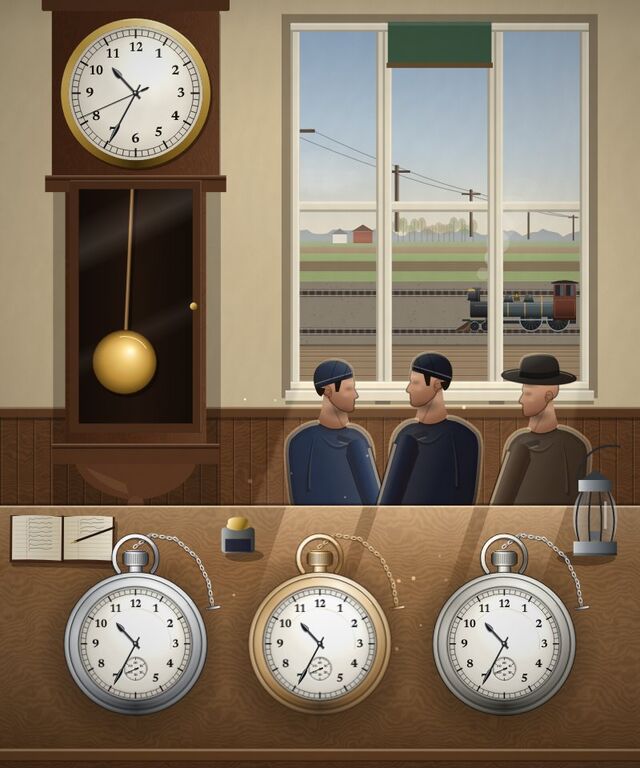
In April 1891, two trains on the Lake Shore and Michigan Southern Railway collided near the depot at Kipton, Ohio, killing several people. The most widely told explanation is that a crewman's pocket watch (accounts differ on whether it belonged to the conductor or the engineer) had stopped for about four minutes and then started again, throwing off the timing meant to keep the two trains apart.
That detail should be treated carefully. It doesn't appear in the official accident report, and one watch historian has traced it to an interview the railroad's own time inspector gave nearly twenty years later, in 1910. The wreck itself is well documented; the stopped watch, as its precise cause, rests on a story told well after the fact.
What's certain is what happened next. The railroad hired Webb C. Ball, a Cleveland jeweller, to overhaul its approach to timekeeping, and his recommendations became the basis of national standards for railroad watches: a minimum of 17 jewels (tiny gem bearings that cut friction inside the movement), accuracy within 30 seconds a week, checked regularly, and, notably, set with a small lever hidden behind the front bezel rather than an exposed crown, so a watch couldn't be knocked out of time by a bump in a pocket.
"Railroad grade" became shorthand for a watch precise and dependable enough to trust with people's lives, a reputation that started with rules written to prevent Kipton, whatever exactly caused it, from happening again. Watches are still sold under that name today, built to the same basic promise Ball wrote into his standard: a watch a railroad, or anyone else, can actually rely on.