Stop 97 of 109 · The Watch That Hums
1960 · New York, United States
The Wristwatch That Hummed Instead of Ticking
In 1960 a new movement swapped the swinging balance for a tiny tuning fork buzzing 360 times a second, and you could actually hear it.
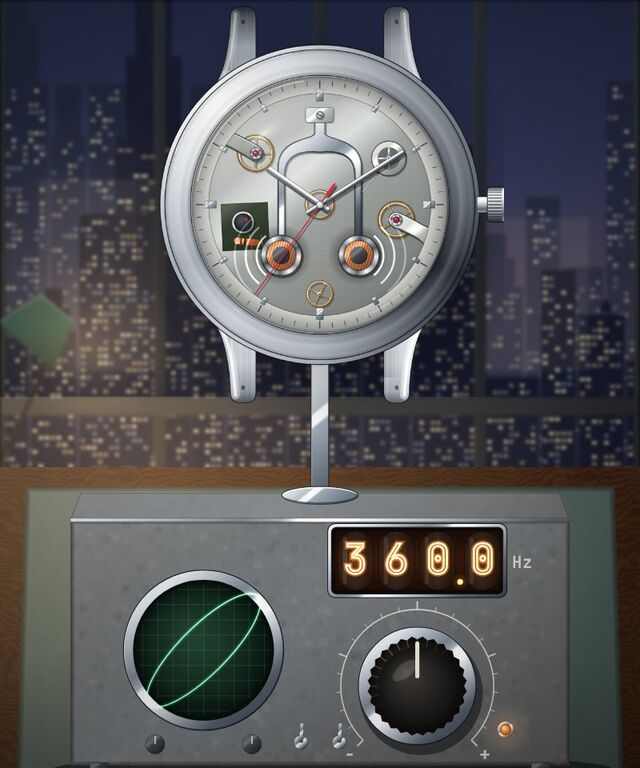
In October 1960, Bulova began selling a wristwatch built around an idea entirely new to watchmaking: instead of a swinging balance wheel, a tiny tuning fork, a two-pronged strip of metal that vibrates at a fixed rate, invented by the Swiss-born engineer Max Hetzel, kept the time.
A battery and a single-transistor circuit keep the fork vibrating 360 times every second. A jewelled finger on one of its tines nudges an index wheel of 300 teeth forward by one tooth with each vibration, turning the wheel just over once a second to drive the hands, which is why the seconds hand glides smoothly instead of ticking.
That fast, steady vibration is also why the watch hums: hold one close to your ear and you can hear a faint, high note, somewhere between F and F-sharp. It was guaranteed accurate to within about two seconds a day, remarkable for its time.
The idea outlived its own watch in more than one sense. Bulova timers built on the Accutron movement flew aboard Skylab in 1973 and 1974, helping astronauts keep time on their onboard experiments, and the same basic insight, a steady physical vibration standing in for a swinging wheel, still keeps time inside the quartz crystal of nearly every watch made since.