Stop 49 of 109 · The Lost Day
1522 · Cape Verde, Santiago Island
The Day That Went Missing Somewhere Over the Pacific
Magellan's crew kept a diary every single day of their three-year voyage, and still came home a day behind.
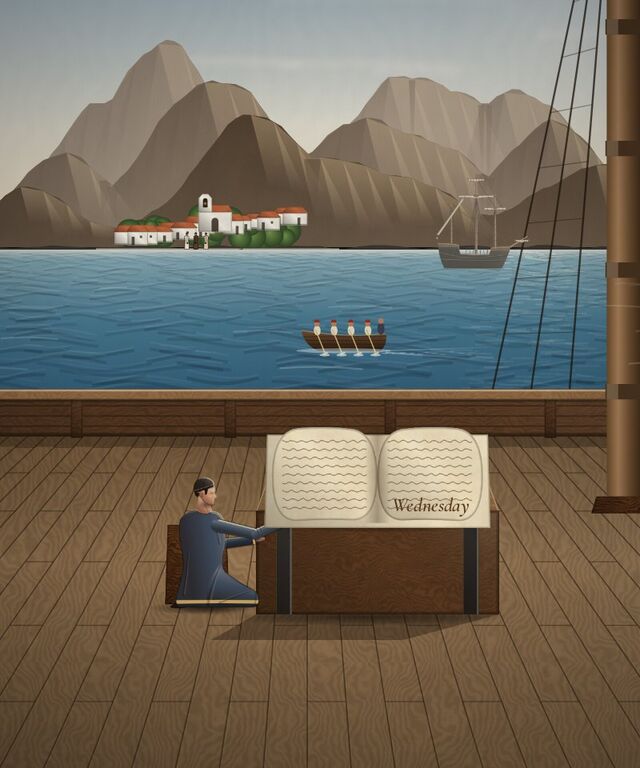
In July 1522, the last ship of Magellan's fleet, the Victoria, put in at Cape Verde for food, nearly home after sailing around the world. Its crew sent men ashore and asked, as a matter of course, what day it was. The answer startled them: the Portuguese on the island said it was Thursday. By the ship's own count, carefully kept the entire voyage, it was Wednesday.
The chronicler Antonio Pigafetta was baffled enough to write about it directly, insisting he had 'set down every day without any interruption.' He wasn't wrong, and neither were the islanders: that's the honest, established answer, not the myth it might sound like. Sailing west, the Victoria had followed the sun around the world, and in doing so it had quietly gained a day on everyone who stayed still: one sunrise fewer than the people back home had seen.
It would be centuries before this became a named, drawn line rather than a shipboard mystery. Today the International Date Line runs roughly along the 180th meridian, a convention, not a treaty, and does the job automatically: cross it heading west and you skip a day forward; heading east, you live one twice.
A watch set for wherever you are still carries a trace of that first confused evening in Cape Verde: its date, unlike its hour, always tied to a place, not just a time zone.