Stop 39 of 109 · Twelve Windows
1357 · Fez, Marinid Morocco
The Clock House That Kept Time It No Longer Remembers
Twelve brass bowls once rang out the hours in Fez, but nobody alive knows exactly how the mechanism worked.
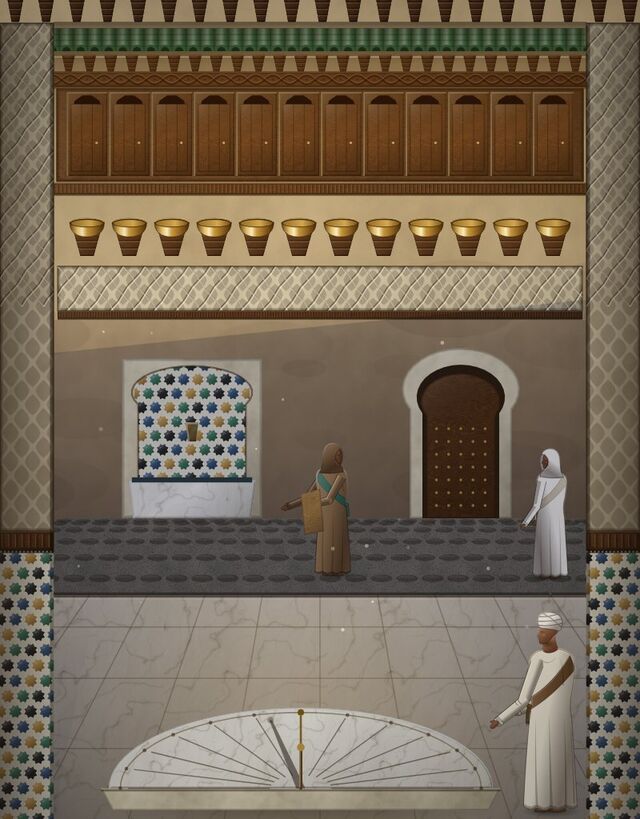
On the street of Talaa Kebira in Fez, opposite the Bou Inania madrasa, stands a plaster and cedar building with twelve small windows, each looking out over a brass bowl. It is Dar al-Magana, the water-clock house, finished in 1357 and designed by a timekeeper named Abu al-Hasan ibn Ali al-Tilimsani.
Behind its doors, a small cart once moved along a track, driven by a hanging weight and a float rising in a tank of water. Each hour, a door opened and a metal ball dropped into the bowl below, its ring marking the time for anyone in the street. It was one of the more elaborate public clocks of its age, built to serve a city that read time by sound as much as by sight.
What happened inside is largely a mystery today. The clock stopped working generations ago, and the historical record is too thin to say exactly how its parts fit together. In 2004, restorers took the bowls down hoping to bring it back to life; the attempt did not succeed, and the mechanism has stayed silent since.
Timekeepers of the era knew such clocks needed checking: water flow changes with heat and pressure, so a water clock drifts, and had to be reset against a sundial. A watch drifts too, in its own small way, which is why, centuries later, we still reset it against a more precise reference, whether that's a radio signal or the time on a phone.