Stop 6 of 109 · Two Gates of Winter
c. 4900 BCE · Goseck, Saxony-Anhalt
Two Gates Aimed at Midwinter
Seven thousand years ago, farmers in what is now Germany dug a circular ditch with gates that catch the sun on the shortest day of the year.
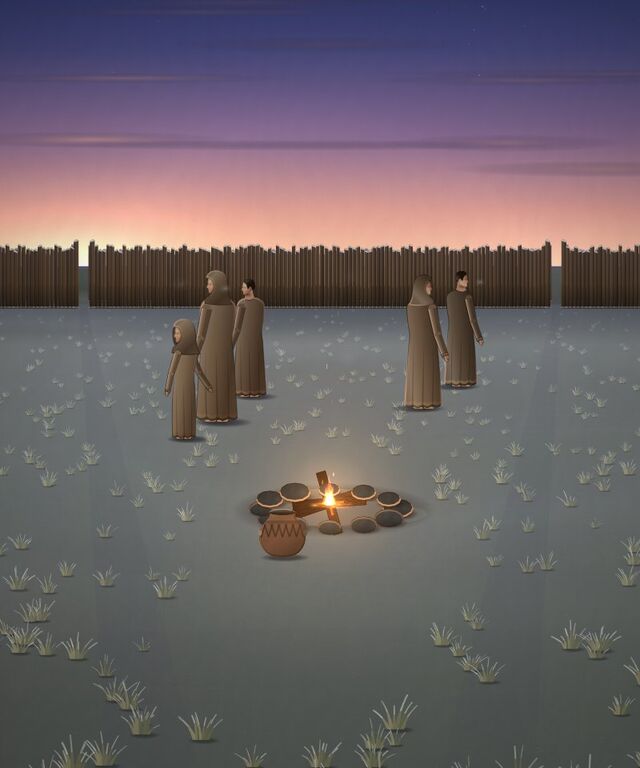
Around 4900 BCE, early farmers of the Stroked Pottery culture dug a ring ditch some seventy-five metres across on a plateau above the river Saale, and raised two rings of oak posts inside it, pierced by three gates facing north, southeast and southwest.
Stand in the middle of the enclosure on the shortest day of the year and the alignment becomes clear: the sun rises through the southeast gate and, that same evening, sets through the southwest gate. On that day, this far north, daylight lasts under eight hours before the gates frame both the year's first and last light.
The site is often called the world's oldest solar observatory, but that label is disputed. Other rings from the same period may be just as old, and some archaeologists think "observatory" claims more precision and intent than a Neolithic ditch and palisade can really support. What is not disputed is the alignment itself, confirmed by excavation between 2002 and 2004 and demonstrated again when the site was reconstructed and opened to the public on the winter solstice of 2005.
Twenty-five kilometres away, and roughly 3,300 years later, someone would bury the Nebra sky disc, a bronze map of the same sky Goseck's builders watched.