Stop 78 of 109 · Lost the Key
1845 · Geneva, Switzerland
The Crown That Made the Watch Key Obsolete
For three centuries, winding a watch meant carrying a separate key that was easy to lose. A Paris exhibition in 1845 showed a better way.
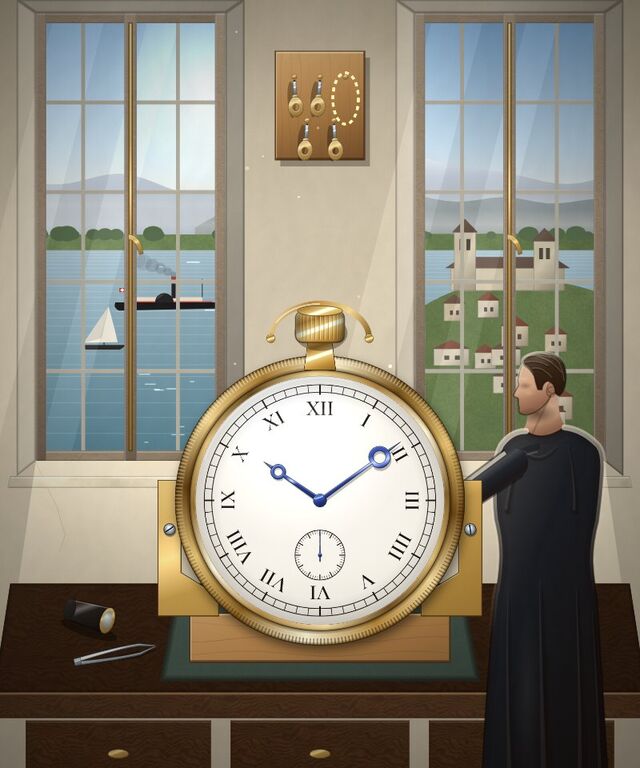
For roughly three hundred years, keeping a watch running meant fitting a small key into a hole in its case and turning it, morning and night. The same key set the hands. Keys were fiddly, easy to misplace, and their holes let dust and moisture into the movement.
The fix that won out came from Jean-Adrien Philippe, a French watchmaker who showed a keyless system at the 1844 Paris exhibition: a single crown that, pushed in, wound the mainspring, and pulled out, turned the hands instead. He patented it in France in 1845 and soon after joined the workshop of Antoine Norbert de Patek in Geneva, the firm that became Patek Philippe.
Philippe wasn't first, though, and who deserves the credit is still argued. Thomas Prest had patented a keyless system in England back in 1820, and Louis Audemars had been making crown-wound watches in the Vallée de Joux since 1838. What made Philippe's version matter was its simplicity: winding and setting through one crown, in two positions, a design so practical it became the standard.
It still is. Pull the crown on almost any watch today, mechanical or quartz, and you're using, in spirit if not exact mechanism, the idea Philippe showed off in a Paris exhibition hall nearly two centuries ago. No key required, and none to lose.