Stop 34 of 109 · Nine Stars of the New Year
c. 1300s · Aotearoa, Polynesia
The Star Cluster That Starts the Māori New Year
When a small cluster of stars rises in the dawn sky each midwinter, it marks the beginning of the year in Aotearoa, a tradition old enough to name nine stars, and new enough to be a public holiday since 2022.
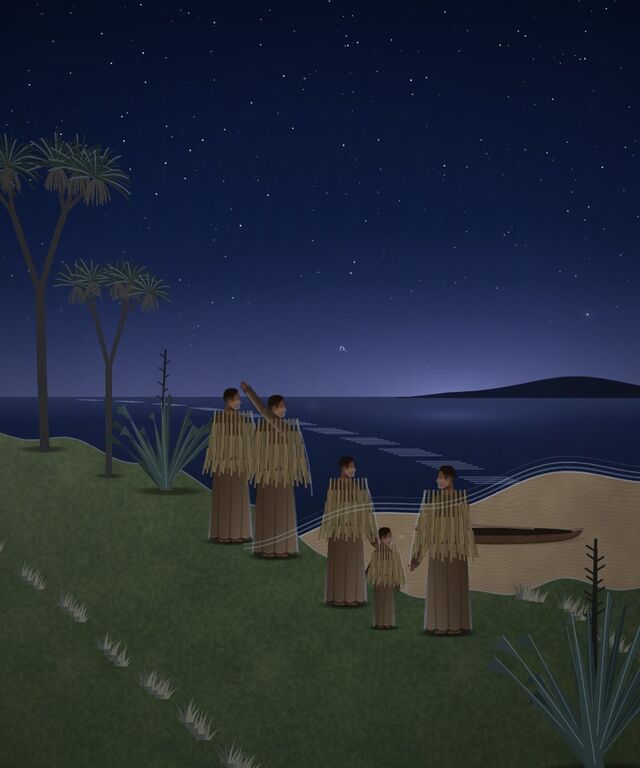
Low in the northeast, just before dawn in the depths of midwinter, a small huddle of stars reappears above the horizon after weeks lost in the sun's glare. Known in much of Aotearoa, the Māori name for New Zealand, as Matariki, and to astronomers as the Pleiades, its reappearance marks the start of the Māori new year.
Traditional knowledge, researched extensively by scholar Rangi Mātāmua, names nine stars within the cluster, each connected to a different domain, among them food from cultivated land, food from the sea, wind, and rain. Watchers read the cluster's appearance for signs of the season ahead: stars seen clear and bright suggested a warm, plentiful year; hazy or faint stars warned of a harder one. It was, and is, also a time to remember those who died in the past year, share food, and look forward.
Not every iwi, or tribal group, watches the same star. In parts of the country where Matariki sits low or is hard to see, some instead track Puanga, the star Europeans call Rigel, as their marker for the new year.
Since 2022, Matariki has been a public holiday across New Zealand, observed on a Friday in late June or early July, a rare case of a genuinely ancient practice, reading one small cluster's dawn rising as the turn of the year, becoming a fixed date on the modern calendar within living memory.