Stop 73 of 109 · A Watch for the Wrist
1810 · Naples, Kingdom of Naples
The Queen's Watch on a Bracelet of Hair and Gold
In 1810 a queen commissioned a watch to wear like a bracelet, one of the earliest wristwatches on record, though it vanished more than a century and a half ago.
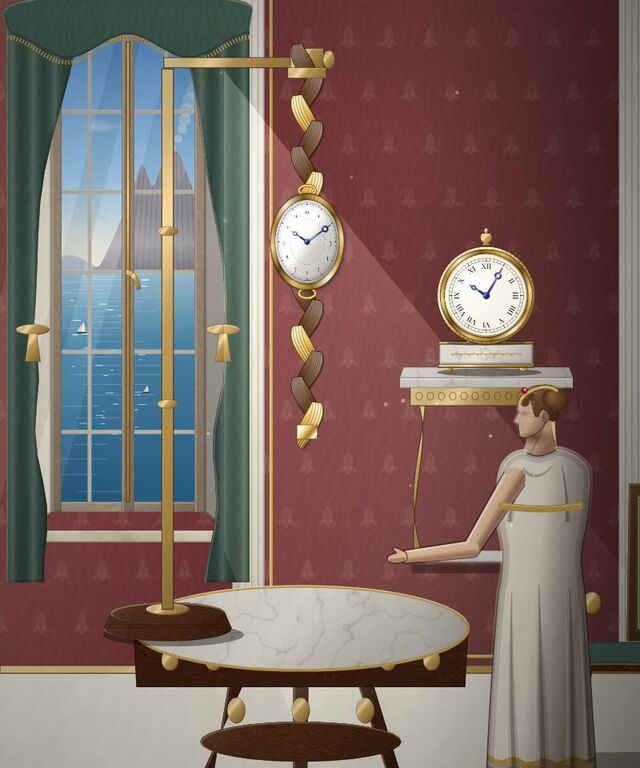
In June 1810, Caroline Murat, Queen of Naples and sister of Napoleon, ordered an unusual watch from Abraham-Louis Breguet's workshop in Paris. Instead of the pocket case then standard, hers was to be worn on the wrist, strapped on with a wristlet plaited from hair and gold thread.
Breguet's ledger records the order precisely: an oval repeater watch, meaning it could chime the hours and minutes on demand at the press of a button, thin enough to sit flat against the arm. It was fitted with a thermometer and a lever escapement (the mechanism, found in nearly every mechanical watch, that ticks off a watch's beats), finished by 1812 and sold for 5,000 francs. It is one of the earliest wristwatches documented in a maker's own records.
But it is not the very first watch ever worn on an arm (Elizabeth I of England received an "armlet" watch as a gift in 1571), and it isn't a surviving one either. The queen's watch, known by its serial number 2639, was brought in for repair in 1849 and again in 1855, and then disappears from the record. Where it ended up, nobody knows.
So the popular idea that the first wristwatch survives somewhere, in a museum or a private collection, is a myth. What survives is the paperwork, not the object, and that turns out to matter: auction houses and insurers today still authenticate an old watch mainly by its serial number and its maker's original records, the same two things that outlasted Queen Caroline's watch by two centuries.