Stop 8 of 109 · The Roof-Box
c. 3200 BCE · Newgrange, Boyne Valley
Seventeen Minutes of Midwinter Light
A passage tomb in Ireland, older than the pyramids, was built to let the sun in for less than half an hour a year.
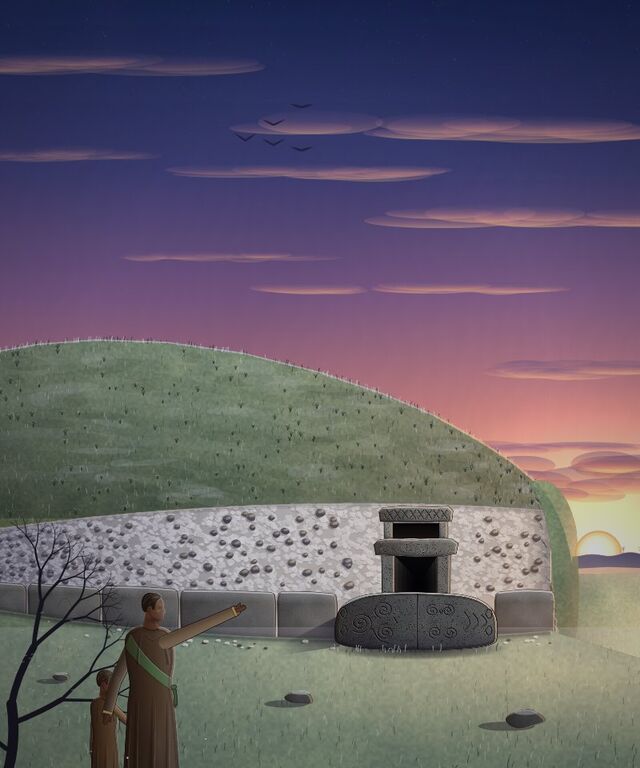
Around 3200 BCE, in Ireland's Boyne Valley, farmers raised a great mound over a stone passage nineteen metres long, ending in a chamber. It predates the pyramids of Giza by several centuries. Above the passage's entrance sits a narrow stone slot, now called the roof-box, that has nothing obviously to do with getting in or out.
The passage itself rises about two metres from door to chamber, enough that ordinary daylight through the doorway never reaches the far end. But on the mornings around the winter solstice, from about the 19th to the 23rd of December, the low midwinter sun lines up with the roof-box precisely enough for a beam to travel the full length of the passage and light the chamber floor, for around seventeen minutes, before the sun climbs too high and the beam slips away.
The alignment is not in dispute. What the builders used it for is: whether it marked a new year, served some ritual purpose, or worked as a functioning calendar is simply not recorded, because nothing at Newgrange comes with a caption.
In 1967, the archaeologist Michael O'Kelly became the first person in modern times to stand inside the chamber and watch it happen. Today, more than sixteen thousand people enter a public lottery each year for a chance at one of the small number of places inside to see it themselves.