Stop 27 of 109 · Japan’s First Clock
671 CE · Ōtsu, Ōmi Palace
The Water Clock That Gave Japan Its Time Day
In 671, Emperor Tenji's water clock rang Japan's first public hours from a tower by Lake Biwa, on a date the country still marks every June.
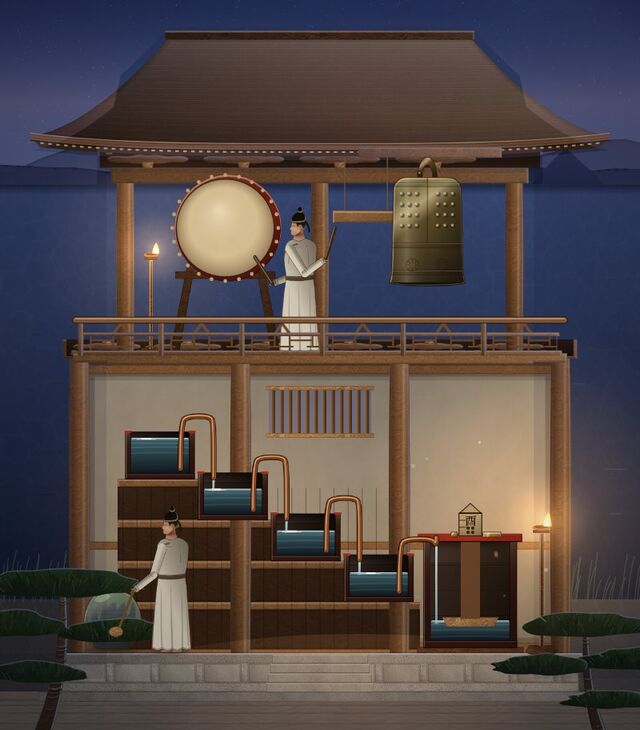
Beside Lake Biwa, Japan's largest lake, Emperor Tenji had a new tower built for a rōkoku, a water clock that let a measured trickle step down through four tanks, each one calming the flow before it reached the next. In the final tank, a float rose steadily as it filled, lifting an arrow marked with the hours.
Japan's earliest chronicle, the Nihon Shoki, records the moment: on a date corresponding to 25 April 671, the clock was set running in its new tower, and for the first time, drums and a bell announced the hour to the whole court. Later court rules spelled out exactly how many drumbeats each hour received, nine at midnight, tapering down as the night wore on, while the bell separately marked the four quarters within each double-hour.
Keeping the clock running took constant attention: someone had to keep the top tank topped up and clear any pipe that silted or clogged, or the whole cascade slowed and every hour after rang late.
That April date in 671, converted to the modern calendar, falls on 10 June, which is why Japan has marked 10 June as Toki no Kinenbi, Time Day, since 1920. It's a fitting anniversary for a clock built to turn a steady drip into something a whole city could hear and act on, the same basic promise a watch still keeps.