Stop 60 of 109 · Hear the Time
1687 · London, Restoration London
The Watch That Chimed the Time in the Dark
Before electric light, pressing a button on a watch and listening to it ring out the hour was the only way to know the time at night.
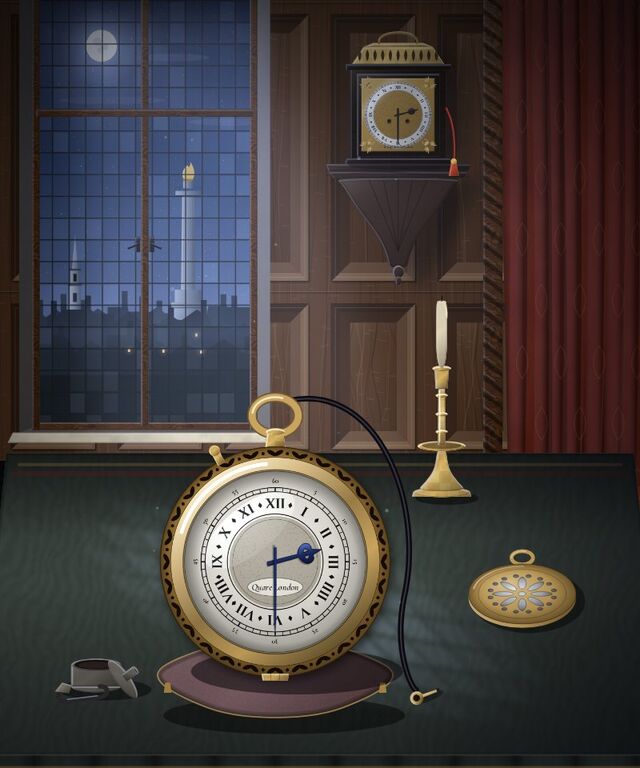
In the London of the 1680s, night meant candlelight at best. A repeating watch solved a real problem: press a small lever on its case and hidden hammers struck a bell inside, low notes for the hours, ding-dong pairs for the quarters, so its owner could read the time by ear alone, without striking a light.
Two clockmakers, the Reverend Edward Barlow and Daniel Quare, both claimed to have invented the mechanism, and in 1687 King James II settled the matter the practical way: he had each man submit a watch and tried them himself. He preferred Quare's, which repeated with a single press of a pin near the pendant, over Barlow's more awkward two-part mechanism. The decision was announced in the London Gazette.
It's a rare case of a monarch acting as a product tester, and the historical record backs it up well; contemporary accounts describe both watches and the trial itself. The story is treated as established fact, not embellishment.
Minute repeaters, descendants of Quare's winning design, remain among the most prized complications, extra mechanisms layered onto simple timekeeping, that a watchmaker can build, chiming out the time on demand exactly as they did for a king three centuries ago.