Stop 92 of 109 · Flip the Case
1931 · India, British India
The Watch That Turned Its Back on Polo
A Swiss businessman's 1930 trip to India led to a case built to survive a game that kept smashing watch glasses, though the polo story itself is the maker's own telling.
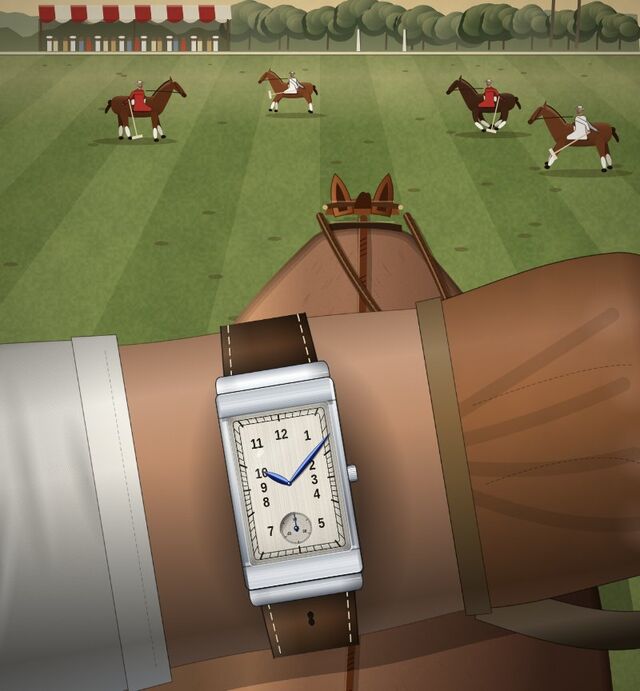
In 1930, the Swiss businessman César de Trey was in India when he met British army officers who played polo and kept cracking the glass on their wristwatches doing it. They asked him for something tougher.
De Trey brought the problem to Jacques-David LeCoultre, and the French engineer René-Alfred Chauvot designed a case that slides sideways in its frame and turns completely over, hiding the glass behind a plain steel back. The patent was filed in Paris on 4 March 1931; the name Reverso was registered that November, and the watch reached shops within nine months.
It is a good story, and it's the one the makers have told ever since, but little of it survives on paper. The 1931 patent itself describes only "a watch capable of sliding in its support and being completely turned over"; it says nothing about polo at all. So the polo tale is best treated as a cherished legend rather than a documented fact.
What is certain is the case itself: still made today, often engraved with an owner's initials on that plain, hard-wearing back.