Stop 109 of 109 · Hear Your Watch
Today · Your wrist, Today
Every Idea in This Tour, Ticking on One Wrist
A mechanical watch is six old ideas working together (a beat, a store of power, a gate, a counter, a face and a case), and the same six explain the watch on your own arm.
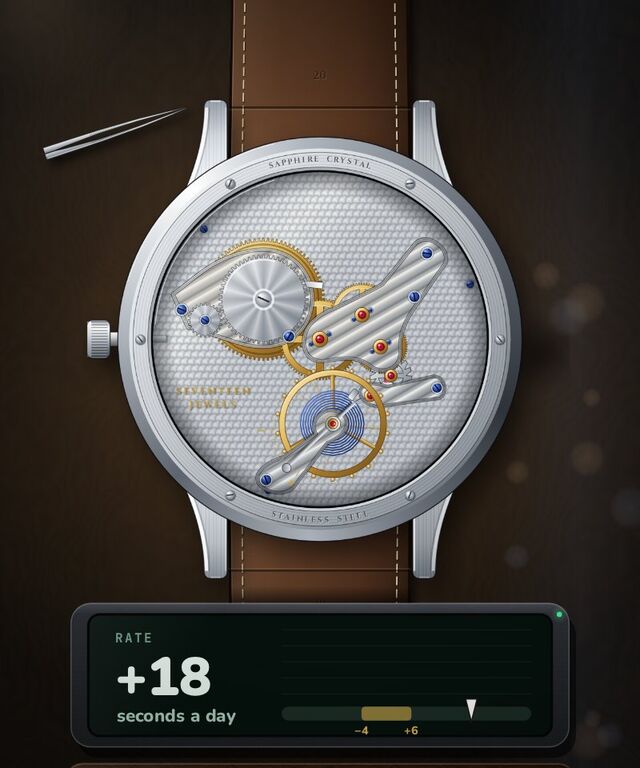
However far back you go in this tour (a notched bone, a monastery bell, a satellite's caesium clock), every timekeeper is really answering the same six questions: what keeps the beat, what stores the power, what gates it out step by step, what counts the steps, what shows the result, and what keeps the whole thing safe.
In an ordinary mechanical wristwatch, those six ideas take physical form as a balance wheel, a coiled mainspring, a lever escapement, a gear train, a dial, and a sealed case: the same six organs, however plain or grand the watch built around them.
A typical mechanical movement beats 18,000 times an hour, two and a half swings of the balance every second, though many modern watches run faster, up to 28,800. The Swiss chronometer standard, COSC, sets the bar for how well a certified movement should perform: on average, no worse than 4 seconds slow or 6 seconds fast each day.
That's not perfection, it's something more useful: a small, imperfect machine, built from six very old ideas, still doing something remarkable every time it's wound.