Stop 17 of 109 · Thirteen Towers
c. 300 BCE · Chankillo, Casma Valley
Thirteen Towers on the Horizon
Along a ridge in coastal Peru, a row of stone towers turns the whole horizon into a solar calendar accurate to a day or two.
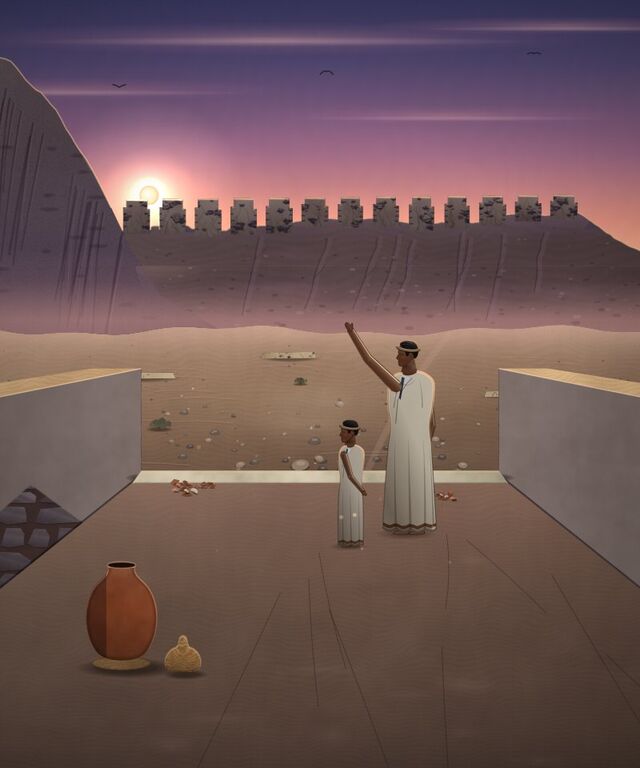
On a low ridge in the desert of Peru's Casma Valley, thirteen rectangular stone towers stand in a row, each between two and six metres tall, spaced roughly ten metres apart, running from north to south. Built around 300 BCE, the towers were arranged so that, seen from a specific observation point about 235 metres to the west, the sun does not rise from the same spot along the ridge every morning: it appears to walk steadily along the row of towers as the months pass.
At the December solstice the sun rises behind the southernmost tower; at the June solstice, behind the northernmost, where the ridge meets a nearby hill. Because each gap between towers corresponds to roughly ten to twelve days of the sun's yearly movement, an observer could read the approximate date from where along the row the sun came up, accurate to within a day or two.
Archaeologists found broken pottery and shells left as offerings at the observation point, suggesting the towers were tied to ceremony as well as measurement, though which specific days were marked for planting, harvest, or festival is not recorded anywhere and remains a reasonable guess rather than a known fact.
In 2021, UNESCO named the site a World Heritage Site, and it is widely considered the oldest solar observatory yet found anywhere in the Americas, roughly 2,300 years old. Earth's tilt toward the sun has barely shifted since it was built, so stand at that same observation point on a solstice morning today and the sun still rises behind the same tower it did in 300 BCE.