Stop 47 of 109 · Pillars on the Horizon
c. 1500 · Cusco, Inca Empire
A Calendar Made of Mountains
The Inca marked the farming year by watching where the sun set behind stone pillars on the hills around Cusco, pillars that no longer exist.
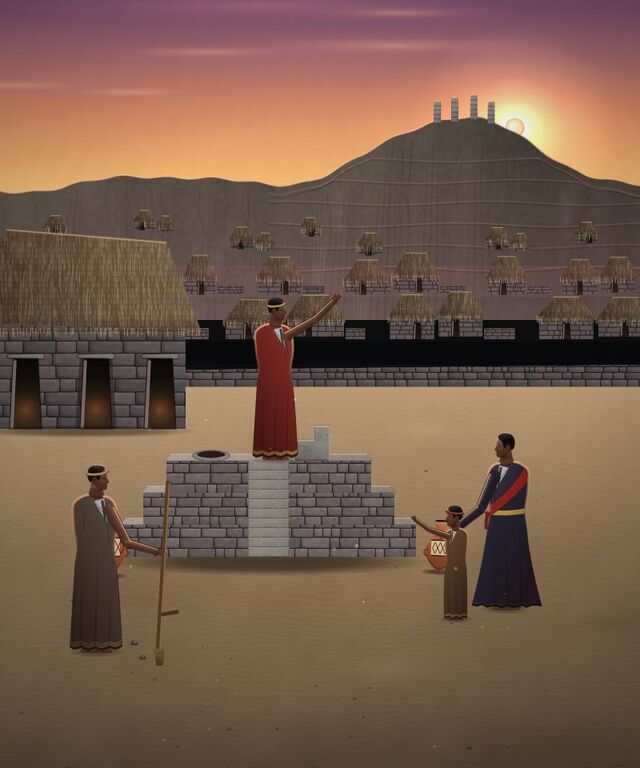
Around 1500, farmers near Cusco did not check a calendar to know when to sow. They watched the horizon. On the hills ringing the city, sets of stone pillars called sucancas marked the points where the sun rose or set on dates that mattered to the agricultural year. Spanish chroniclers who arrived decades later, Betanzos, Cieza de León and Garcilaso de la Vega among them, described the system in some detail, even after it had stopped functioning.
One set, on a hill to the west, is the best documented: watched from the ushnu, a stone platform in Cusco's great plaza, the sun setting between its two middle pillars signalled it was time to sow maize, around August. The June solstice brought Inti Raymi, the great feast of the sun; the December solstice brought Capac Raymi, the royal feast.
It is sometimes said the pillars still stand above the city. They don't: that claim is a myth. They were torn down after the Spanish conquest, and researchers still debate exactly where on the hillside they stood, a sight line reconstructed from old accounts, not a structure anyone can visit today.
The system did leave something behind that outlasted the stone: the words. Inti Raymi, the sun festival the sucancas once timed to the June solstice, still takes place in Cusco every June 24th, revived in 1944 and now one of the largest festivals in South America, drawing its date from the same solstice the vanished pillars were built to catch.