Stop 88 of 109 · Borrow an Hour
1916 · Berlin, German Empire
The Hour Nobody Actually Saved
In 1916, wartime Germany became the first country to move its clocks forward for the summer, an idea often, wrongly, credited to Benjamin Franklin.
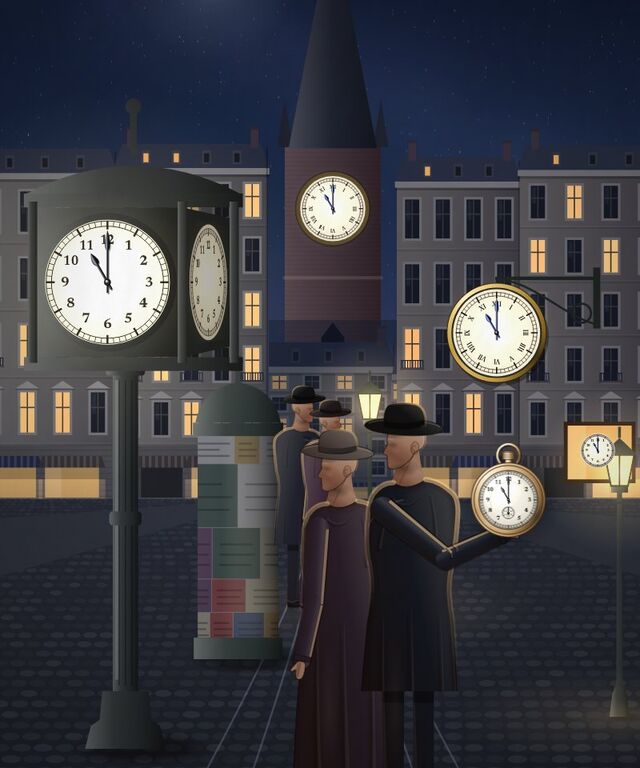
At eleven o'clock at night on 30 April 1916, clocks across Germany jumped straight to midnight. It was the first time any country had officially shifted its clocks for the season, and Austria-Hungary made the same change alongside it. Britain followed three weeks later, on 21 May.
The stated reason was fuel: with Europe at war, an extra hour of evening daylight meant less coal burned for lighting. The clocks didn't create more daylight, of course: they simply moved an hour of it from the early morning, when most people were asleep anyway, to the evening, when it was actually useful.
Benjamin Franklin gets credit for the idea surprisingly often, but he doesn't deserve it. In 1784, writing from Paris, he joked that Parisians should get up earlier and save candles, suggesting church bells and even cannon fire to wake them, but he never proposed touching the clocks themselves. The real campaign for daylight saving came more than a century later, driven in Britain chiefly by a builder named William Willett, whose 1907 pamphlet argued the case seriously, years before any government listened.
The habit Germany started under wartime pressure in 1916 outlived the war by a long way. Twice a year, in much of the world, watches and clocks still get the same treatment those first ones did, nudged forward or back an hour, borrowing daylight from one part of the day to spend it in another.