Stop 101 of 109 · Press for the Time
1972 · New York, United States
Press the Button, See the Time, Save the Battery
The first electronic digital watch, sold in 1972, lit up only when you asked it to, because its red display was simply too power-hungry to leave on.
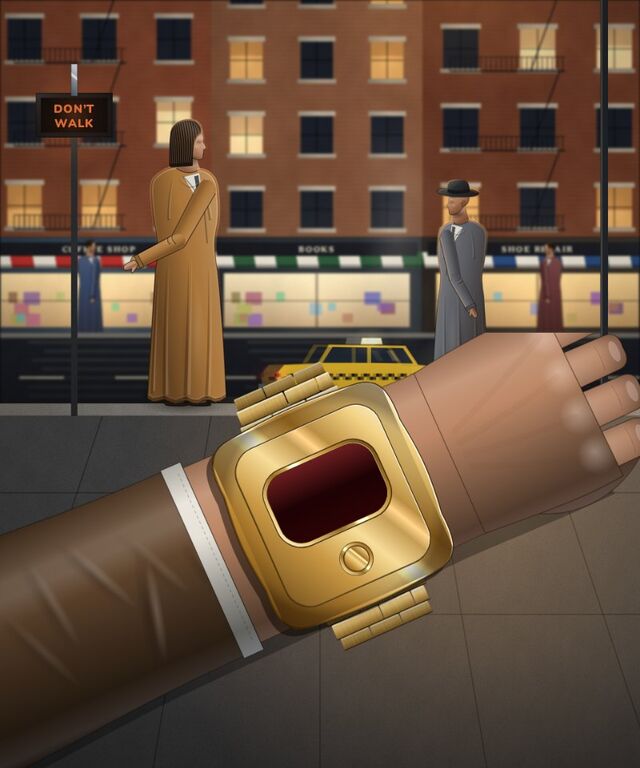
The Hamilton Pulsar, developed with the Texas firm Electro/Data, went on sale on 4 April 1972: the first fully electronic digital watch, with no moving parts at all.
Behind its dark synthetic-ruby window sat a red LED (light-emitting diode) display, driven by a quartz crystal and integrated circuits. LEDs, though, draw far more current than a mechanical watch's tiny gear train ever needed, so the display stayed dark by default; pressing a button lit the hours and minutes for about 1.25 seconds, or the seconds if you held it a little longer.
It wasn't cheap: an 18-carat gold case brought the price to $2,100, at a time when a new Ford Pinto, a small, ordinary car, cost around $1,960.
The always-on liquid crystal display, which uses far less power than an LED, followed from Seiko in 1973 and quickly became the standard for digital watches, but the Pulsar had already made the case that a watch could be built entirely from electronics, with nothing inside it left to wind or swing.