Stop 100 of 109 · Halve It to One
1969 · Tokyo, Seiko Astron
The Watch That Cost as Much as a Small Car, and Changed Everything
On Christmas Day 1969, Seiko sold the first quartz wristwatch, expensive and precise, and the beginning of the end for the mechanical watch's monopoly on ordinary wrists.
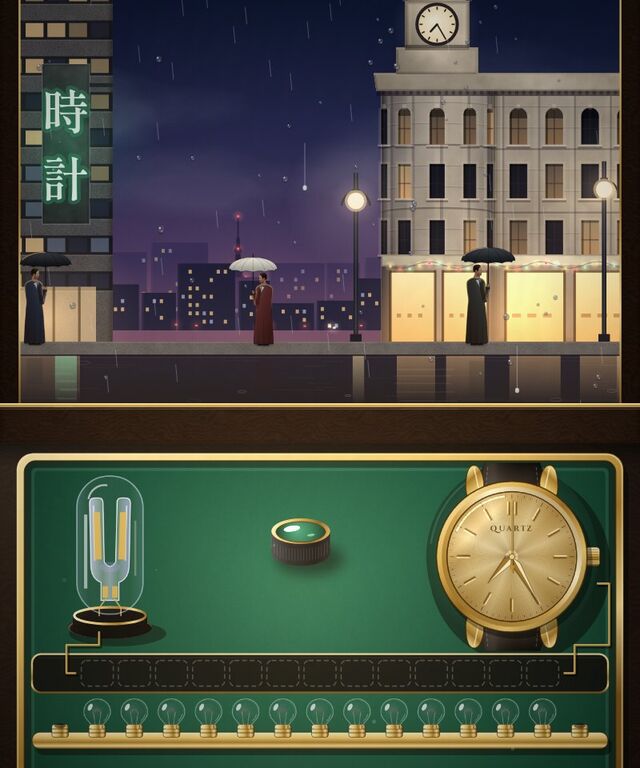
On 25 December 1969, Seiko put the Astron on sale in Tokyo: the world's first quartz wristwatch.
Inside, a quartz crystal vibrated 8,192 times every second. A chain of electronic dividers halved that signal again and again, thirteen times over, until it produced a single, clean tick once a second, the same basic trick, just with more halving steps, that quartz watches still use today, usually starting from a crystal vibrating 32,768 times a second.
The Astron cost 450,000 yen, a price commonly compared to that of a small car (a Toyota Corolla at the time cost around 432,000 yen), a serious sum for a watch that kept time to roughly five seconds a month, a level of accuracy no mechanical watch could promise.
It was expensive and rare at first, but the idea behind it wasn't: within a decade, as the electronics inside grew cheaper, quartz watches had spread everywhere, and the mechanical watch's long monopoly on ordinary wrists was over.