Stop 54 of 109 · The Self-Ringing Bell
1601 · Beijing, Ming China
The Gift That Let a Missionary Stay
In 1601, a striking clock opened the doors of the Forbidden City to Matteo Ricci, who never once met the emperor who kept it.
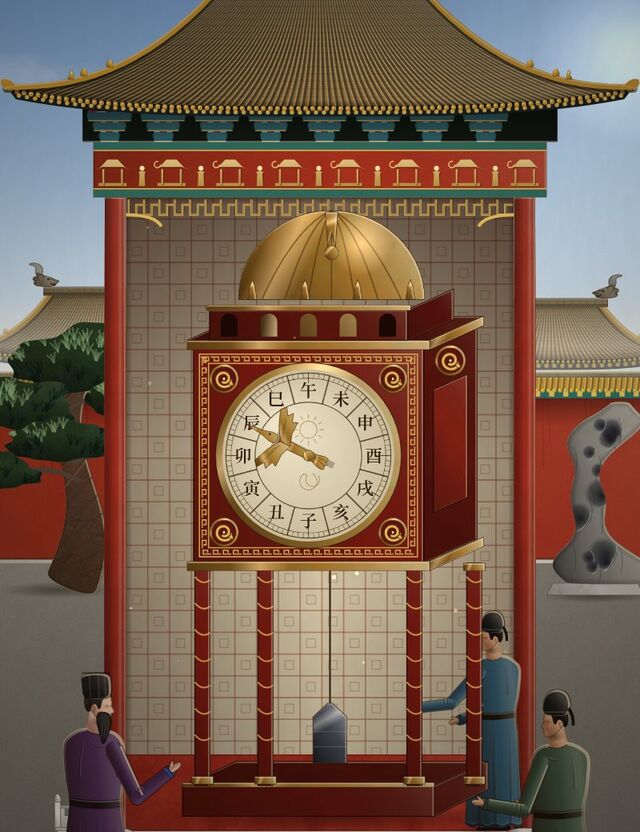
When the Jesuit missionary Matteo Ricci reached Beijing in January 1601, he brought gifts meant to interest the Wanli Emperor in what he and his fellow missionaries had to offer: a large weight-driven clock and a small gilded one, both self-striking: 'self-ringing bells,' as contemporary accounts called them, a name that captured exactly what impressed the court.
The emperor kept the small clock near him and ordered the Ministry of Works to build a carved, gilded pavilion to house the larger one. But no one at court knew how to keep either clock running. Four eunuchs of the Directorate of Astronomy were sent to learn from Ricci, and because only the Jesuits could keep the clocks working, the missionaries were granted permission to remain in Beijing, access that changed the course of the Jesuit mission in China.
Ricci never saw the man whose clocks he had wound. In nine years living in Beijing, he never once met the Wanli Emperor in person; visits to court meant bowing to an empty throne and communicating through the palace's eunuchs, the only channel the emperor allowed.
The clocks themselves struck their hours by a simple counting trick, a notched wheel that let a hammer fall only as many times as the hour required, the same basic idea, wheels counting out strokes, that still sits behind a striking or chiming watch.