Stop 106 of 109 · The Glide
1999 · Shiojiri, Nagano
A Spring That Never Ticks, Braked by a Crystal
One watchmaker's idea, chased for over twenty years, let a wound mainspring drive a watch's hands in one smooth glide instead of a mechanical tick.
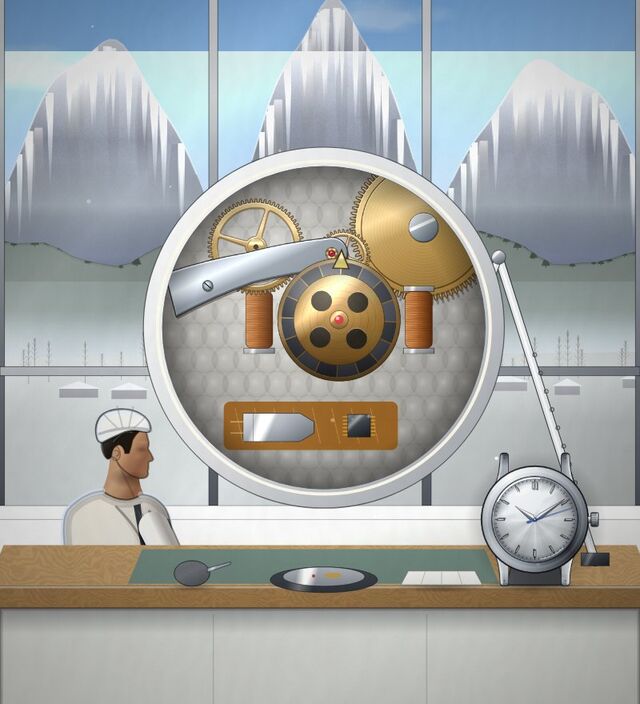
In 1977, an engineer named Yoshikazu Akahane, working at Suwa Seikosha, later Seiko Epson, had an idea he would spend the rest of his career chasing: keep a mechanical watch's mainspring and gear train, but replace its balance wheel, the small wheel that normally ticks back and forth to set a watch's pace, and its escapement, the mechanism that releases that ticking power in tiny, regular clicks, with something new.
His solution was a "glide wheel," spun by the gear train about eight times a second, its small magnets sweeping past coils to generate a trickle of electricity. That electricity powers a quartz crystal and a circuit, which compares the wheel's speed to the crystal's own steady beat and brakes it electromagnetically whenever it starts to run ahead, so the seconds hand sweeps in one continuous glide, with no mechanical tick at all.
Around 600 prototypes were built before Akahane's method was presented publicly in 1997 and shown at Basel the following year. He died in 1998, at 52, months before the first Spring Drive watches went on sale in Japan that December.
The movements are still made by Epson at Shiojiri, in Nagano, using the same trick every one has used since: a mainspring's old-fashioned power, released now by an electronic brake instead of a mechanical tick.